Corey McLaughlin has put forth a monumental effort in his four-part series...After reading these articles, I found myself agreeing with most of them, so much so that it has ironically led me to disagree with the basic contention of the series, that we are in fact fragmented along the lines Corey describes.
Read MoreWho am I to be even suggesting that this beloved hymn by John Newton is lacking or deficient in any way? I must be nuts! Don't get me wrong everything that these lyrics proclaim is true and indeed wonderful...
Read MoreIn A Devil of A Dilemma: Part 1, we examined Revelation 20:10 honestly and cogently, but many were not impressed or satisfied with what we termed a sort of “modified conditional immortality view.” In truth, that is not a particularly good name since there is nothing actually modified about it per se, it merely states the main assertion of conditional immortality in plain language and follows it to its logical conclusion.
Read MoreAt the 2017 ERA annual meeting, President Steve Brown of BICS presented the idea that the major barrier to unity within the Advent Christians is “theological fragmentation.” The major proposed solution, assuming one accepts the premise, was a call for a hermeneutical reformation (a la Kaiser as exemplar) to reinvigorate and reestablish basic, core, essential principles of interpretation in hopes of gaining unity of mind together.
Read MoreCorey McLaughlin and Tom Loghry have levied some heavy charges over the last couple of weeks. They have indicated that it is our responsibility as Advent Christians to hasten the Second Coming of Christ. I want these good and well meaning servants of Christ to know this…I’m not ready for that. I certainly want Christ to return, but can’t he wait until I’ve gone on vacation first?
Read MoreThe title of this article is punctuated with a question mark because of the embryonic stage at which it is being put forward. In his latest two-part series, “Advent Christians in the 21st Century”, Corey McLaughlin has set before us what is in my estimation one of the most pivotal reflections on Adventism in late Advent Christian history. Conditionalism has dominated Advent Christian identity in the latter part of our history, but McLaughlin has reminded us of our other hand, in fact what was once our dominant hand, which is our Adventism.
Read More“Life can only be understood backwards; but it must be lived forwards,” says Søren Kierkegaard. This is all the more crucial for the new generation of Second Adventist leaders as they ponder the four stages of social movements and apply them analogously to our denomination, noting that we are currently in the final stage of decline and therefore soon failure. The grave is dug, the tombstone is written, but the body has yet to fall. Is there yet still vibrant life in this mortal frame? In order to understand who we are, we must first look back:
Read MoreEarly yesterday afternoon, Tim Keller sent out a tweet that set Twitter ablaze with controversy. Keller tweeted, “Jesus didn’t come primarily to solve the economic, political, and social problems of the world. He came to forgive our sins.” Accusations immediately began to pour in that Keller was claiming that Jesus does not care about social justice.
Read MoreSo, all the book reviews I read are either summary and analysis types which can get too involved or interview the author types which can meander too much, but it occurred to me that it would be nice to have a Q&A review that gets to the meat and potatoes of an author’s premise and gives a taste of their core assertions. Then again, it is me writing this so it may be both too involved and too meandering! Note: Dr. Vanhoozer’s personal responses are in the last two questions if you are interested (basically the ones I could not confidently figure out on my own).
Read MoreKeeping the Gospel in front of you daily is even more important than making sure you eat three square meals a day. Continually reminding yourself of your standing before God in Christ is essential if you are going to live as a disciple of Jesus Christ in such a way as to render loving obedience to Him. All our striving to live according to the Law of God apart from a functional faith in the Gospel is both frustrating and fruitless.
Read MoreI know, you have been told that human souls are immortal: they can never die. You have been told “you have an immortal soul and are capable of living in immortal glory.”[1] But what if the Bible spoke of souls as dying, and referred to the dead as dead souls. Would that make a difference.? Would you have to re-examine your theology of the soul? I hope you would.
Read MoreBut our God is no mere object to be worshipped, He is a subject, a someone, The Someone, the Hero, the protagonist of the greatest story ever told. He is active, not passive, close not far away. He moves and we are moved. He pours out His grace, and we receive and return it back with praise. Theologian Marva Dawn captures the picture well, “The gifts of worship flow from God the subject and return to God as the object of our reverence.”[2]
Read MoreWithin the context of the Reformation each sola affirms something and denies something else. The final authority of the church is sola Scriptura (by Scripture alone) rather than tradition.[1] Salvation comes sola fide (by faith alone) rather than by a combination of faith and good works,[2] as well as sola gratia (by grace alone) which excludes any and all human effort or cooperation, in solus Christus (Christ alone) as the only mediator of that grace rather than penance, sacraments, the Priests, the heavenly Saints, or Mary, all to and for soli Deo Gloria (Glory to God alone) rather than man.
Read MoreThe first time Martin Luther thought he was going to die he cried out, “O, Mary help!”[i] The second time, only a few years later, during a mighty thunderstorm he fell off his horse and screamed, “Save me, St. Anne, and I’ll become a monk!”[ii] Years later after washing in the cleansing waters of Gospel grace and drinking the living water of Gospel life thus truly becoming born-again he would launch the Protestant Reformation. In one sermon he would reflect back soberly saying, “St. Ann was my idol.” He told the congregation the despicable truth of the human heart is that “it is easier for us humans to believe and trust in everything else than in the name of Christ, who alone is all in all…”
Read MoreBefore I get on with what I am about to write, I want to first dispel any narrow association that might be assumed in my use of the word “mission”. Very often when we hear the word “mission” we think “missions”, and more specifically “foreign missions”. This is to be expected since the sort of talk in our churches that typically involves words that sound like “mission” are usually in association with short-term missions trips and supporting foreign missionaries.
Read MoreWe believe the Bible to be the inspired, the only infallible, authoritative Word of God. (2 Timothy 3:16; 2 Peter 1:20-21)
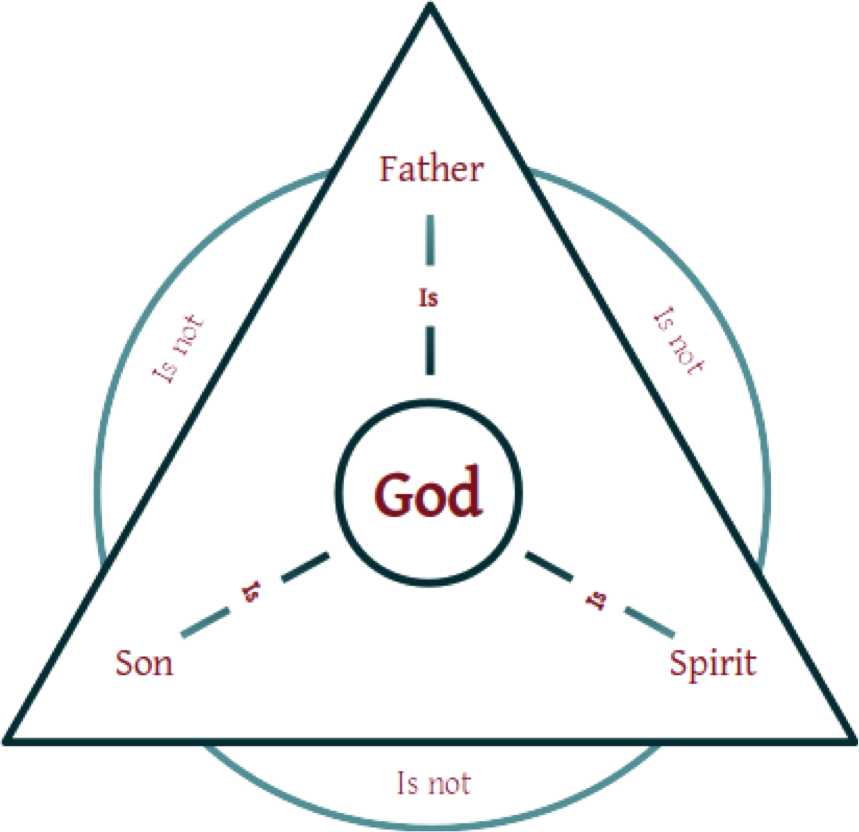
We believe that there is one God, eternally existent in three persons: Father, Son and Holy Spirit. (Deuteronomy 6:4; Matthew 28:19)
We believe in the deity of our Lord Jesus Christ, in His virgin birth, in His sinless life, in His miracles, in His vicarious and atoning death through His shed blood, in His bodily resurrection, in His ascension to the right hand of the Father, and in His personal return in power and glory. (Philippians 2:6-11; 1 Peter 3:18; Romans 5:9; Matthew 26:64)
Read MoreIs “No Creed but the Bible” actually faithful to the Bible? It is a simple question that can spur a lot of debate, but it is worth asking and trying to answer so that our churches and the denomination as a whole can become biblically stronger, healthier, and more unified. Here are 10 reasons we should pull a Frozen and “Let it go!” (If I had hair, I’d sling it back while I sang the song, but you will just have to imagine that for yourself!).
Read MoreI have wondered about the vocal promulgation of creedalism within the Advent Christian Denomination. I want to share some thoughts regarding what I understand are two of the major arguments in favor of adopting a statement of faith and present what I feel is the greatest weakness to the presentation.
Read MoreFor the past 150 or so years there has been an ongoing debate as to whether we should collectively affirm the historic doctrine of the Trinity. On one hand, it has been argued that the Trinity is part of the foundation of Christian belief and is, in one sense or another, an essential aspect of salvation by grace, through Faith in Christ alone. On the other hand, others have argued that it is merely a construct of the Roman Catholic church, a late addition to Christian belief, an extra-biblical teaching, or even an anti-biblical teaching. This has, it seems, prevented this denomination from fully joining together in Christian unity. And although in recent weeks these arguments have been brought forth anew as we together consider whether we should adopt the NAE statement of faith as our own, there has yet to be an argument set forth publically for or against the Trinity based on the Biblical evidence. It is, therefore, my intent to show the reader that the Trinity is an essential and biblical doctrine.
Read More